Science

Psychedelic Hallucinations may be generated in our retinofungal pathway!

Psychedelics are one of the most mysterious compounds. Still today, we have plenty of questions to answer. However, we got a step closer to understanding them with the recent study published by the University of Maastricht and the team of Zeus Tipado, Kim P.C. Kuypers, Bettina Sorger, and Johannes G. Ramaekers, who brought to light a new theory that psychedelic induced hallucinations might generate in the retinofugal pathway.

Join us to uncover this hypothesis and understand the mysterious world of psychedelics.

Psychedelic Hallucinations may be generated in our retinofungal pathway! Read More »

Impact of new Halogenated Tryptophan Derivatives on Psychedelic Research

Groundbreaking research has demonstrated the potential for enzymes to selectively halogenate tryptophan at the 5-, 6-, or 7- positions, with particular emphasis on the 7- position, opening up opportunities to expand bio-based production to different hosts and halogenation positions within tryptophan, making it relevant for a cheaper large-scale industrial production of tryptophan pharmaceutical derivatives.

In the realm of psychedelics, this method could lead to the development of various tryptamine-based psych*delics and new halogenated beta-carbolines that can be used as alternatives to MAOIs in pharmahuasca blends. The possibilities are vast and exciting.

Impact of new Halogenated Tryptophan Derivatives on Psychedelic Research Read More »

What Is Shadow Work? Psychology, Spirituality & Self-Exploration Explained

In the intricate landscape of human psychology, the concept of the shadow self, as elucidated by Carl Jung, represents the latent and often repressed aspects of our personality. Emerging research suggests that psychedelics, particularly empathogens-entactogens such as MDMA and 2C-B, may serve as catalysts for unveiling these hidden dimensions.

Through controlled clinical settings and guided therapy, individuals undergoing psychedelic experiences have reported profound insights into their shadow selves, leading to enhanced self-awareness and psychological integration.

Join us in examining personal anecdotes, confronting the intersection of untreated shadow manifestations and the transformative potential of psychedelic-assisted therapy.

What Is Shadow Work? Psychology, Spirituality & Self-Exploration Explained Read More »

Prehistoric Psilocybin

Ethnobotanicals are the most antique forms of psychedelic consumption, but for how long have they been around? We have proof of human and animal ingestion around 3,000 years ago, but could species before have also presented the existence of such species?

A newly published study from the University of Utah and the Natural History Museum of Utah suggests that the Psilocybe genus could be around about 65 million years ago!

Join us to uncover a hypothesis of why the genus started developing psilocybin and the first appearance of the fungi during prehistory.

Prehistoric Psilocybin Read More »

Apollo Neuro Solution to Beat Stress, Achieve Better Sleep in World Sleep Day

Sleep is one of the most essential functions for the survival of every species. Unfortunately, the presence of social media, and the need for productivity lead to augmented stress, impacting our sleep schedules and quality of sleep.

To fight stress, we often pick up habits such as smoking, drinking alcohol, overusing coffee breaks as an escape, using substances such as Cannabis, or even throwing ourselves into the microdosing quotidian.

Despite the benefits of these compounds, plenty of these substances reduce the quality of sleep even further.

For this reason, Apollo Neuro released its own Wearable.

This wearable addresses the root of stress and anxiety, the nervous system.

Apollo Neuro works as touch therapy by delivering gentle, soothing vibrations, called Apollo Vibes, like music your body can feel reducing stress and helping you relax to fall asleep.

Apollo Neuro Solution to Beat Stress, Achieve Better Sleep in World Sleep Day Read More »

Australia Leads Psychedelic Therapy Revolution with First MDMA Prescription

Last week, Australia just made history by making the first MDMA prescription. Dr. Ted Cassidy decided to prescribe MDMA to his patient, a female suffering from chronic, treatment-resistant PTSD.

Dr. Cassidy claims that one session of MDMA was equivalent to one year of treatment.

Join us to understand how MDMA can help treat mental illness, the previous history of MDMA psychotherapy, the influence of the Shulgins on various psychotherapists, and various other studies done in the era!

Australia Leads Psychedelic Therapy Revolution with First MDMA Prescription Read More »

Alchemy: The primordial of chemistry

Have you ever wondered who on earth invented chemistry?
You might have answered Antoine Lavoisier in your mind, but what concepts existed before those who invented modern chemistry, and what are the primordials of what we now call chemistry?

To understand this, we dive into Ancient civilizations known for the origins of Alchemy, Mathematics, Geometry, and Medicine. We uncover the Hermetic philosophies and doctrines behind these civilizations, the reigning question of who was Hermes Trismegistus, and the origins of alchemy.

Alchemy: The primordial of chemistry Read More »

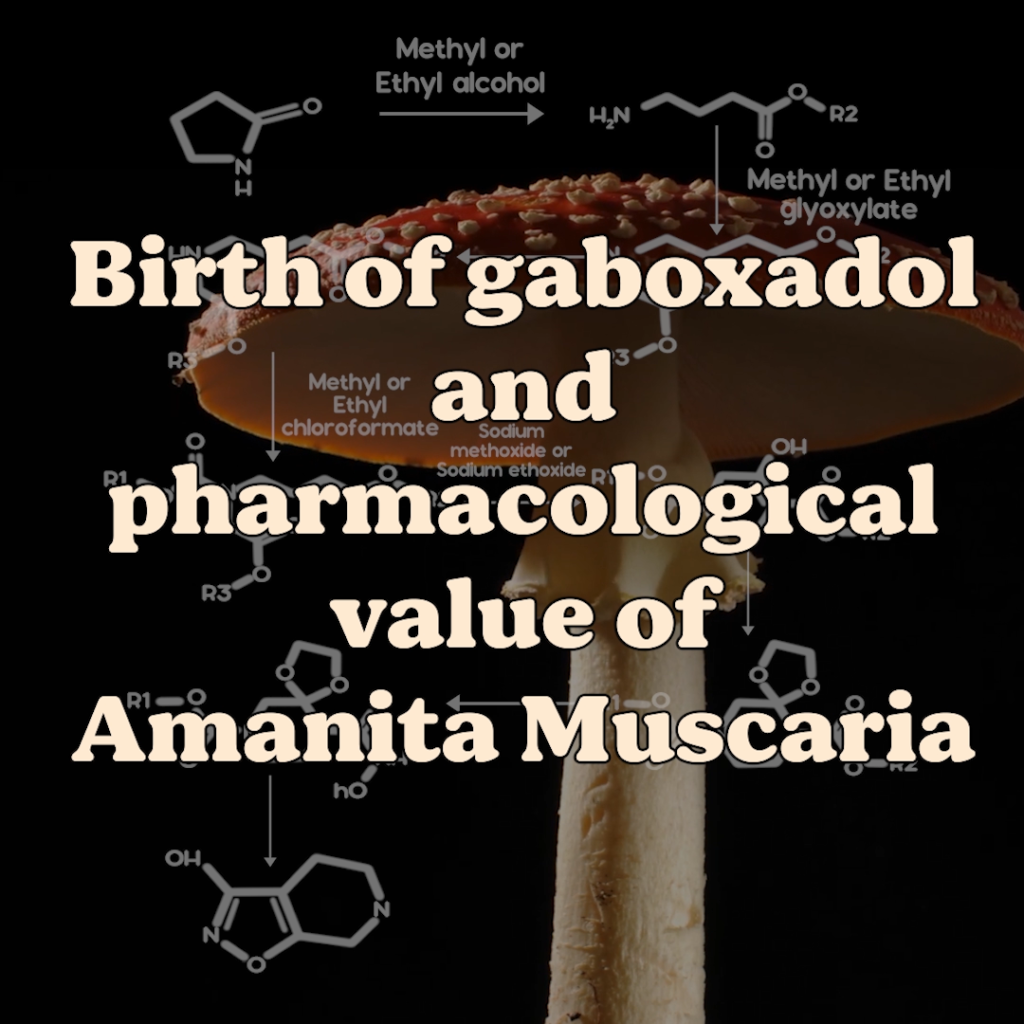
Amanita Muscaria in a nutshell: The birth of Gaboxadol and pharmacological value of Amanita

After covering the cultural impact of Amanita Muscaria, we dive into the influence of the mushroom on the chemist Povl Krogsgaard-Larsen and the birth of Gaboxadol.

How the mushroom became popularized as a recreational drug, how to find your dosage, the effects of Amanita Muscaria, and the potential of the mushroom as a therapeutic tool, as an anti-inflammatory and anti-cancer agent.

We understand how Amanita Muscaria can be used to help with anxiety, autism, and panic disorder by looking up to the story of the YouTuber Amanita Dreamer.

And how, despite the constant arguing about whether the mushroom is neurotoxic or not, Amanita Muscaria made its way into being a delicacy, being served as ice cream in France (including our recreation of the 1909 recipe) and pickled in Japan under the name BENI-TENGU-DAKE.

Amanita Muscaria in a nutshell: The birth of Gaboxadol and pharmacological value of Amanita Read More »

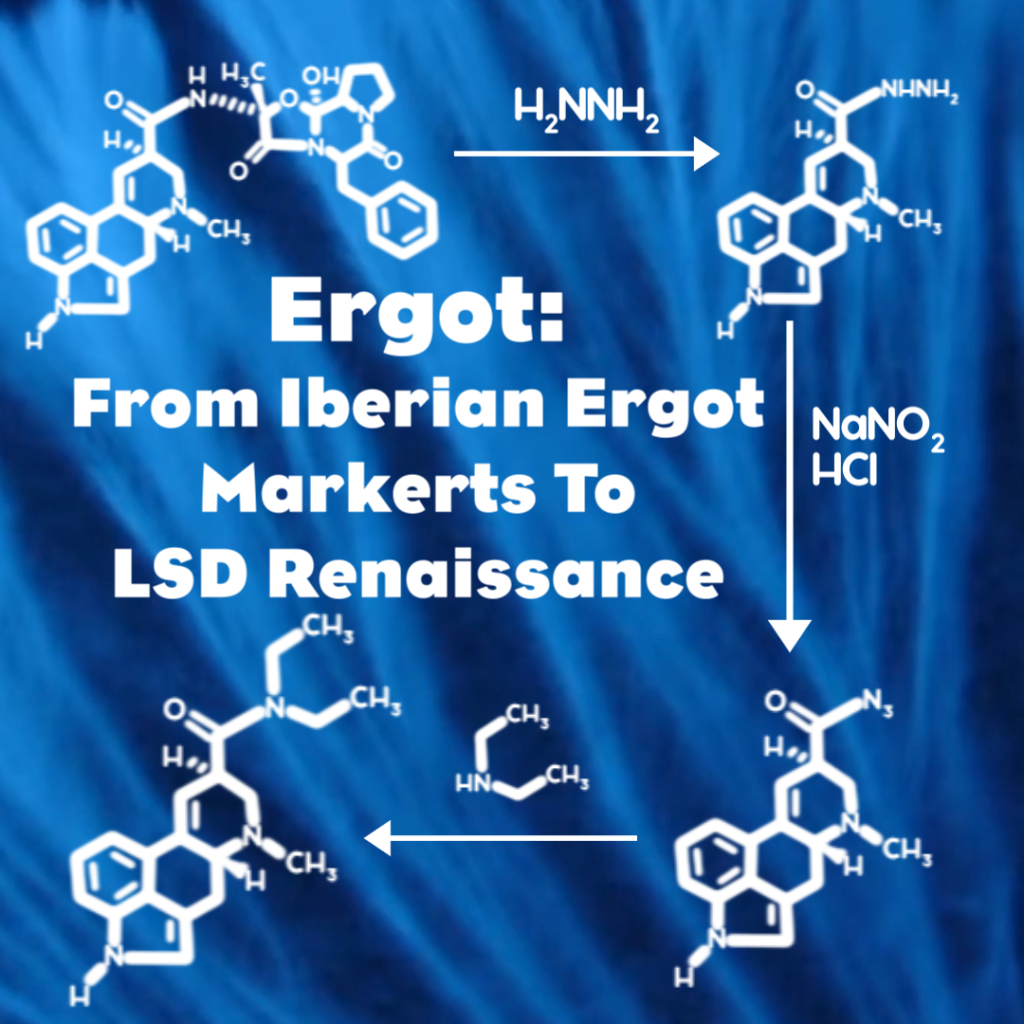
Ergot: From Iberian Ergot Markets to LSD renaissance

Since the ’60s, the word LSD has been amongst us quite frequently, especially nowadays, with traditional therapies being replaced by psychedelic retreats and micro-dosing. But where does exactly LSD come from? Is it purely synthetic, or does it come from nature?

Believe it or not, it comes from a fungus widely known since 500 to 1500 CE, Ergot. This fungus works similarly to puffballs and carries ergot alkaloids. Funnily enough, when Albert Hofmann synthesized LSD, he wasn’t trying to synthesize a psychedelic but trying to find more ergot alkaloids that historically have been used to speed up labor and control postpartum hemorrhage and as a treatment for patients with moderate to severe migraine.

Unfortunately, things were much darker during the Medieval era. Ergot would infect rye and various kinds of cereal, and after consumption of the infected cereals, people would become ill with ergotism. Ergotism plagues were known as Saint Anthony’s Fire for their mild effects. Often, people would experience convulsions, seizures, spasms, diarrhea, paresthesia, severe itching and burning sensation (hence, its nickname St. Anthony’s fire), headaches, nausea and vomiting, and mental effects such as hallucinations, mania, and psychosis until their death.

You might think, well, that is all over now. We can’t have ergot contamination nowadays, right?

The answer to this might surprise you negatively. We still have the chance of infection of crops. The infection can expand to the poisoning of farm stocks, causing gangrene in the extremities of animals that feed in contaminated fields. Fortunately, with the control of food sold in markets, it would be nearly impossible for an outbreak similar to those during the medieval era.

But where did Ergot come from? They were using it clinically to speed up labor and control postpartum hemorrhage during a period.

Most of the Ergot would come from Portugal and the Northwest Spain. During that period, the fungus was valuable and impacted the capita of these countries. Peasants would collect the fungus by hand, and the owners of the land would take the items to an Ergot dealer that would ship the product worldwide.

Leaving us with one last question.

With the psychedelic renaissance and the movement towards legalization of psychedelics, will we get to see the cultivation and selling of Ergot available after centuries of prohibition?
Ergot: From Iberian Ergot Markets to LSD renaissance Read More »

Atropine witches, a story of medieval potions

With the approach of the night of Halloween, we uncover what it meant to be a witch during the medieval era, why they were hunted down and burned, and the influence of Christianism in non-Christian cultures such as Mazatecs and Native Americans, Modern-day witches, and the fact you may be practicing witch rituals without knowing, botanical name codes for witches, what is inside a witch potion or brew, the use of Atropine, and Scopolamine in Medieval era and their pharmacological use today and their pharmacodynamics.

We hope you enjoy your Halloween!

Atropine witches, a story of medieval potions Read More »

Shopping Cart