Science

Are Psychedelics causing wormholes in the brain?
In this article, we will be covering a groundbreaking concept, Neural Geometrodynamics, which could allow us to understand the brain and the effects of psychedelics better.

The theory aims to understand the brain’s complexities by transcending traditional views of neural function, proposing a dynamic interplay between the brain’s structure and operations, akin to the relationship between spacetime and matter in general relativity.

Are Psychedelics causing wormholes in the brain? Read More »
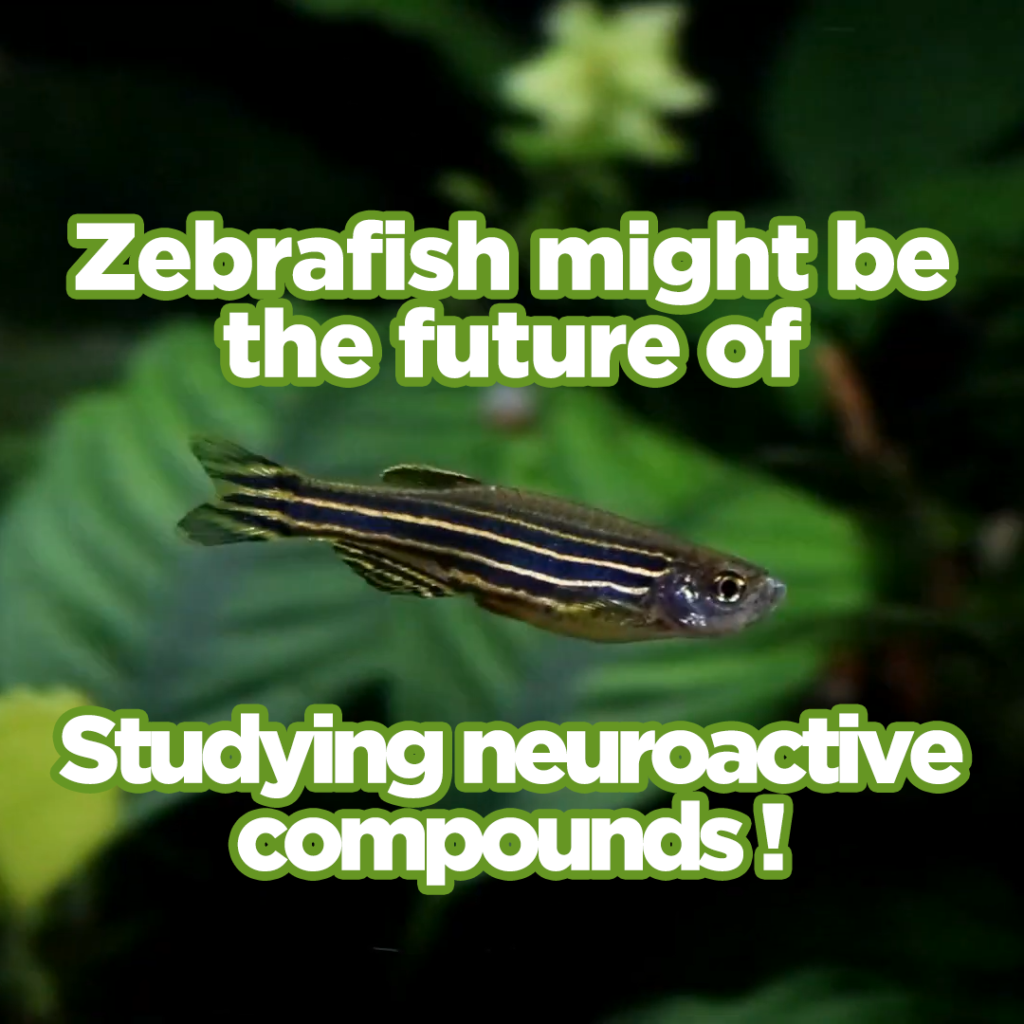
Zebrafish might be the future of studying neuroactive compounds

Fully understanding the mechanisms of action of neuroactive compounds is difficult due to their complexity and polypharmacology. Making single-target drug discovery nearly impossible.

Phenotypic screening was one of the solutions brought by science. However, this method faced historical limitations until recently.

A group of researchers from the University of California found a way to rapidly profile thousands of compounds using larval zebrafish, which share genetics and CNS anatomy with humans, making complex behavioral readouts possible.

Find more here!

Zebrafish might be the future of studying neuroactive compounds Read More »

Sassafras: The history behind the MDMA precursor

Lately, an acronym has been around everyone’s mouths, in some for its potential as a therapeutic tool, in others for the recent dilemma after the FDA denied its use as a tool for the treatment of PTSD. We are talking about MDMA.

We have all heard about the story of Sasha Shulgin re-discovering MDMA and becoming coined as the ‘Godfather’ of MDMA by the media (which he publicly claimed to hate.) But did you know that at some point in history, MDMA had a natural precursor?

A plant that goes under plenty of people’s radars and suddenly became absent from psychedelic history after the mass destruction of specimens by the US government, leading to the endangerment of its species after MDMA became popular in nightclubs, this plant is Sassafras.

Sassafras: The history behind the MDMA precursor Read More »

Our daily stimuli explained!

Stimulants are the most used compounds in the world.

This statement may sound rather bold to many, considering how the media portrays the use and abuse of other substances. But by rethinking our routine, we tend to wake up and brush our teeth in the morning, followed by breakfast and coffee or tea

Join us to find the secret chemical properties of coffee and tea and figure out that energy drinks may not be as harmful as they seem!

Our daily stimuli explained! Read More »

This is what looks like when Scanning our trips!

Psychonauts often worry about their brain, whether because of a bad experience. We might feel our brain becomes less responsive or that something doesn’t feel right post-trip, or we can have an underlying condition. The current forms of brain scans are limiting and expensive. For this reason, plenty of psychedelic interaction with the brain and their therapeutic effects remains quite a mystery. However, this might be about to change! Learn more about how CaST might be changing the way we study psychedelics with us.

This is what looks like when Scanning our trips! Read More »

What is the Novel concept Entheogenic Synergy?

Following up on last week’s article, we clear up what we coined as Entheogenic Synergy, which bifurcates into Recreational Synergy and Therapeutic Synergy, concepts intended to raise awareness of anthropological values, beliefs, and elements susceptible to changing our biochemistry, microbiota, neurochemistry, and the way we think, such as music, hearing other experiences, expectations, and the journey to our destination, as well as conversations we have about the experience, being present to a new environment and language, learning to adapt, changing our neuroplasticity and thermoregulation are explored as equally as the psychedelic experience, and even further, be included in the psychedelic experience in the future research. 

What is the Novel concept Entheogenic Synergy? Read More »

Is the Entourage effect of Peyote legit?

The entourage effect is a phenomenon that has been gaining traction in psychedelic research. What at first was thought to be a phenomenon observed solemnly in the cannabis community and the entourage effect between THC and other phytocannabinoids turns out to be much more extensive than what we thought to be and to influence several species such as the Psilocybe genus. One specific study highlighted the significance of this phenomenon by demonstrating the superior therapeutic accuracy of psilocybin extracts compared to synthetic psilocybin.

However, there is a species that hasn’t been spoken of enough when mentioning the entourage effect. Lophophora Williamsii (Peyote).

Join us and understand the entourage effect in Peyote!

Is the Entourage effect of Peyote legit? Read More »

Slow releasing Ketamine tablets might be the future for the treatment of severe depression

The notion of Ketamine being a horse tranquilizer is slowly shifting into the compound as a tool in psychotherapy for the treatment of several mental illnesses, allowing novel therapies, such as Ketamine VR and using Ketamine to treat post-finasteride syndrome, to be developed.

However, there is a downside to Ketamine therapy. Its availability, the cost, and the fact that patients stay in clinics for two hours after administration. But this might be changing soon!

Researchers are currently in clinical trials for the approval of a slow-releasing racemic Ketamine tablet that will lower the cost of Ketamine therapy and can be administered at home by the patient as it doesn’t have the typical dissociative side effects in IV Ketamine and has low chances of addiction according to researchers.

Slow releasing Ketamine tablets might be the future for the treatment of severe depression Read More »

Do Blind People Hallucinate on Psychedelics?

One of the most intriguing effects of psychedelic compounds is their capability to induce visual hallucinations. But how would it feel if someone visually or hearing impaired took a psychedelic? Would they still be able to have visual/auditory hallucinations? Compelling research says perhaps, as congenitally blind patients have proven to have visual hallucinations in near-death experiences, concepts of synaesthesia may take a role in the experience. Additionally, if the brain had access to visual-auditory data if someone lost their vision/hearing recently, there is a chance the brain may be able to generate visual/auditory hallucinations!

Proving us the wonders of neuroplasticity and Paul Bach-y-Rita’s quote. “We see with our brain, not our eyes.”

Do Blind People Hallucinate on Psychedelics? Read More »

Shopping Cart