Guides

Types of psychoactive compounds

Society often misunderstands what drugs are. We all have a family member or a friend who says they are against drugs, but they consume alcohol, coffee, or smoke. 

Likewise, the community blurred the narrow line between what is psychedelic or simply psychoactive. We have constant arguments on whether MDMA, Cannabis, or Ketamine might be psychedelic or not. 
To some, the compounds become psychedelics based on the dosages. To others, the compounds fall into more scientific terminologies.

Join us to learn about the various classes of psychoactive compounds and how they affect our daily lives.

Types of psychoactive compounds Read More »

What Is Shadow Work? Psychology, Spirituality & Self-Exploration Explained

In the intricate landscape of human psychology, the concept of the shadow self, as elucidated by Carl Jung, represents the latent and often repressed aspects of our personality. Emerging research suggests that psychedelics, particularly empathogens-entactogens such as MDMA and 2C-B, may serve as catalysts for unveiling these hidden dimensions.

Through controlled clinical settings and guided therapy, individuals undergoing psychedelic experiences have reported profound insights into their shadow selves, leading to enhanced self-awareness and psychological integration.

Join us in examining personal anecdotes, confronting the intersection of untreated shadow manifestations and the transformative potential of psychedelic-assisted therapy.

What Is Shadow Work? Psychology, Spirituality & Self-Exploration Explained Read More »

DMT vs 5-MeO-DMT: Effects, Risks & Key Differences

With the popularization of terms such as “Toad Medicine” or “5-MeO”, people began to wonder about the differences between DMT and 5-MeO-DMT.

Generally, you might come across misinformation regarding the differences between the two. Because of its name, people believe that 5-MeO-DMT is just like DMT, and it all feels the same. “It’s all DMT at the end of the day.”

For this reason, we decided to cover the differences between DMT and 5-MeO-DMT.

DMT vs 5-MeO-DMT: Effects, Risks & Key Differences Read More »

Harm reduction 101: The harm reduction guide

This harm-reduction series will be sharing tips on how to have safe trips. Covering subjects such as psychedelic therapy, and psychedelic retreats, the importance of testing your compounds, set and setting, and the importance of having a plan and using a trip sitter.

In this chapter, we will be focusing on the importance of testing your substances and when to use each reagent, what is set and setting and their importance, the importance of tripsitters (buddy-system), and how to create a safety plan when using psychedelics.

Harm reduction 101: The harm reduction guide Read More »

Harm reduction 101: Psychedelic therapy and psychedelic retreats

This harm-reduction series will be sharing tips on how to have safe trips. Covering subjects such as psychedelic therapy, and psychedelic retreats, the importance of testing your compounds, set and setting, and the importance of having a plan and using a trip sitter.

In this chapter, we will be covering the misconception of psychedelics alone being able to heal mental illnesses, and the processes behind psychedelic therapy, including what is integration, types of integration, and how to be safe in international retreats.

Harm reduction 101: Psychedelic therapy and psychedelic retreats Read More »

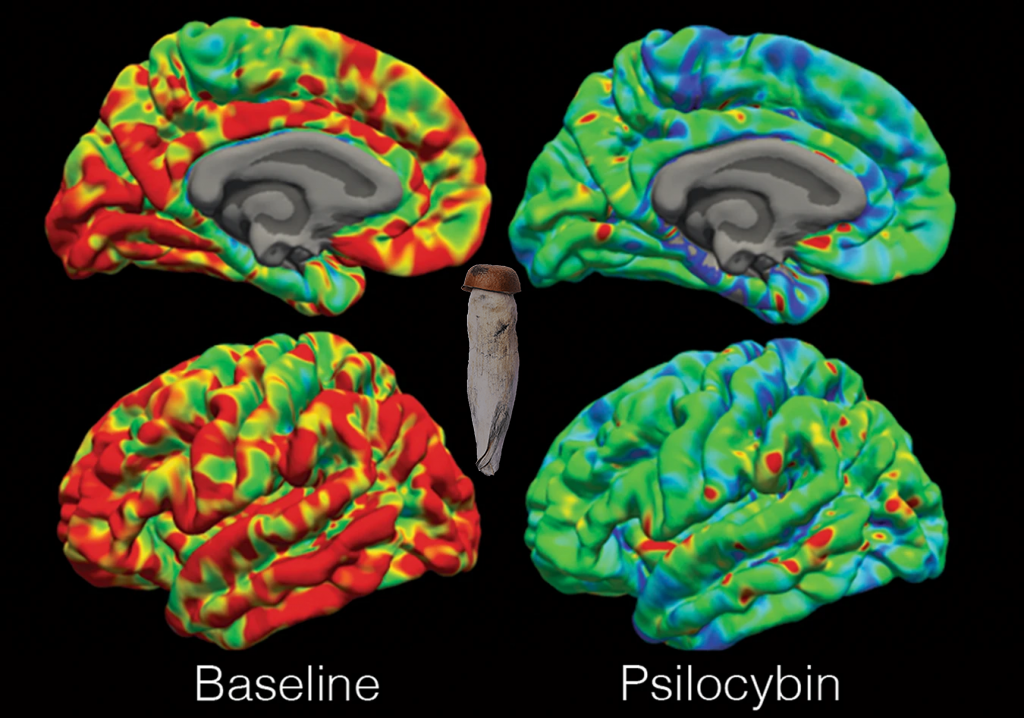
How Psilocybin Affects the Brain: Neuroscience Explained

Since the introduction of the Psilocybe genus to the western community, various genetic engineering experiences were made birthing various strains, among them the WillSolvem Peyote Strain.

Recent revolutionary research conducted by the Usona Institute unveiled for the first time the true crystal structure of psilocybin opening doors for new psilocybin analogs, such as CYB003, believed to hold the potential to treat major depressive disorder (MDD) and alcohol disorder. This analog is designed to have less variability in the plasma levels, a faster onset of action, shorter duration, and potentially be more tolerable versus oral psilocybin.

Along with the mycological and chemical discoveries, how the substance acts in the brain and its potential use for the treatment of clinical depression is also being explored together with the hypothesis of psilocybe altering the gut microbiome, thus creating a potential avenue for new pharmaceutical tools targeting the gut-brain axis.

How Psilocybin Affects the Brain: Neuroscience Explained Read More »

Morning Glory, the ancient LSA experience

Since the pre-Hispanic times, tribes such as the Zapotecs, Chinantecs, Mazatecs, and Mixtecs used Morning glory seeds (Ololiuqui), despite the hallucinatory and vasoconstriction effects, E.T Brady Jr from the Ross General Hospital believes the effects can be reversed using chlorpromazine in addition to psychiatric consultation to aid mental health building a bridge between ancient shamanism and modern psychopharmacology.

Morning Glory, the ancient LSA experience Read More »

Shopping Cart