Goncalo V.

Inspired by Alexander Shulgin, my focus is to make science accessible to everyone through various articles, storytelling, and meaningful experiences.

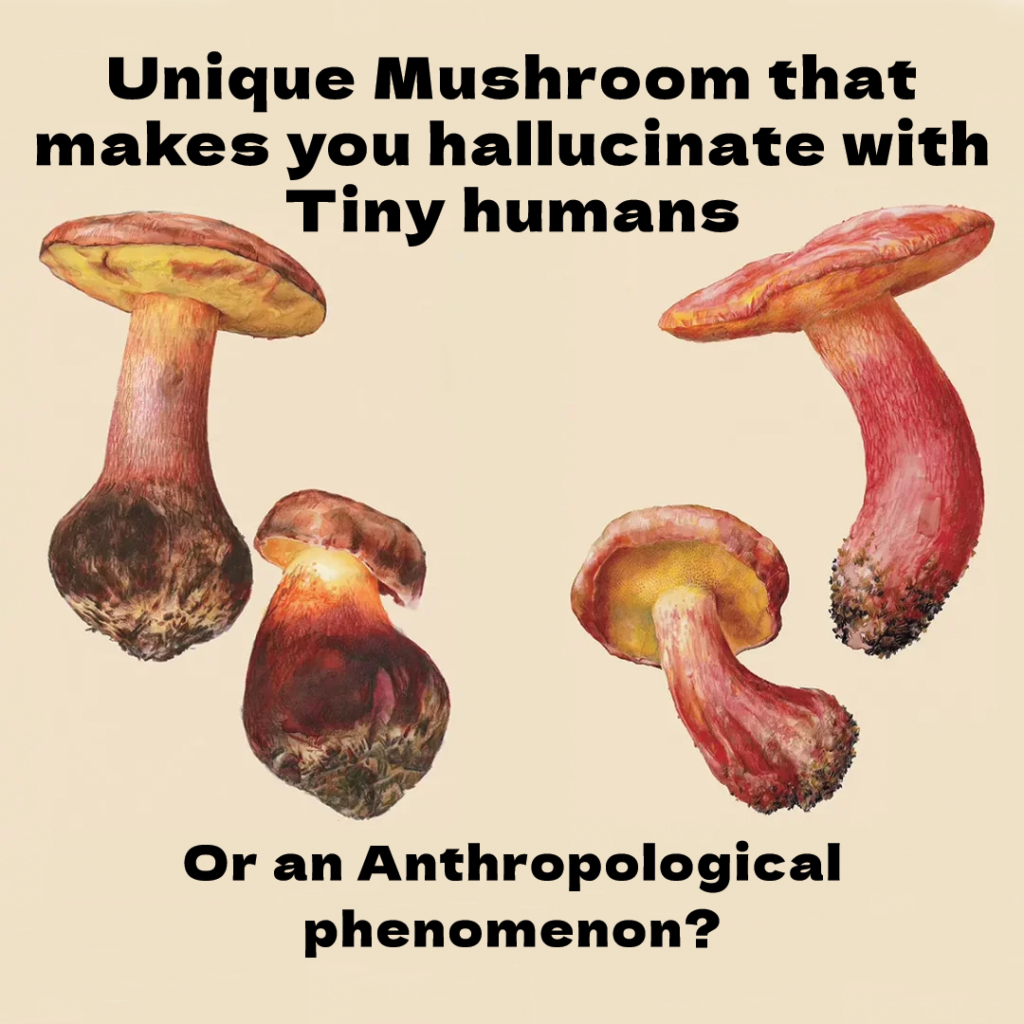
Lanmaoa Asiatica lilliputian hallucinations or an anthropological phenomenon?

Lanmaoa Asiatica lilliputian hallucinations or an anthropological phenomenon?

Lanmaoa Asiatica lilliputian hallucinations or an anthropological phenomenon? In January 2026, a mushroom began to appear in various news outlets after its appearance on the BBC due to its unique effects, Lanmaoa asiatica. When mentioning mushrooms and hallucinations, our brain automatically says it’s either psilocybin (from the psilocybe genus) or muscimol (from Amanita Muscaria); however, once we analyze trip reports from these compounds, they often don’t follow a pattern, even if ingested multiple times throughout our lifespan, making these trips “unpredictable” in the sense of we cannot predetermine what the peak of our trip will look like, especially when mentioning visual hallucinations. However, things are far different when mentioning Lanmaoa asiatica. Unlike the unpredictability of visual effects in other mushrooms and psychedelics, doctors at hospitals in the Yunnan Province of China (the natural habitat of Lanmaoa asiatica) report hundreds of cases every year, with 96% of the patients having the same visions of “tiny people” or “elves”, dancing, jumping, or marching around the environment. Here’s where things become interesting… How do people obtain these mushrooms, and what causes these hallucinations? Surprisingly, Lanmaoa Asiatica is one of those mushrooms that lived for ages under everyone’s radar until 2014, when a group of mycologists in Yunnan purchased and sequenced the mushroom, making it a species known to science. During the sequencing and understanding of the mushroom in the eyes of science, something rather unique was found. Lanmaoa Asiatica is more closely related to Porcini (Boletus edulis) than any known psychedelic mushroom species. Where people get these mushrooms might also surprise you, as these fungi aren’t scheduled; they can still be bought in open-air street markets and are present on restaurant menus when in season, despite reports from hospitals and warnings.   The reason why lies in the cultural and folk knowledge surrounding the mushroom and its hallucinatory effects, while the species is fairly recently acknowledged by science, Lanmaoa Asiatica, like Ayahuasca, once had deep ancient roots in the Chinese culture, with data remoting to Daoist texts from the 3rd century CE refering to a flesh spirit mushroom that if consumed raw allows people to “see a little person” and “attain transcendence immideatly”. “If you see a little person seven to eight cun 寸 [3-33cm] tall riding in a carriage when you travel on a mountain, you have encountered a flesh spirit mushroom. Consume it raw, and you will attain transcendence immediately.” – Daoist Ge Hong (~300CE) – The Master Who Embraces Simplicity 抱朴子:] “Rou zhi 肉芝 (Flesh Spirit Mushroom). Meet our Ecstasymon- Limited Edition collection Apparel Ecstasymon- Limited Edition 17 ounce Stainless steel water bottle $45.00 Apparel Ecstasymon Limited Edition Unisex Sweatshirt $65.00 Apparel Ecstasymon Limited Edition Unisex T-Shirt $45.00 While what makes the mushroom hallucinatory is still unknown to science, this quote actually brings us more clues to what makes the mushroom cause hallucinations than we might think, and so users on the notorious psychonaut forum Bluelight caught up to this little detail and began speculating about what could be the compound responsible for such lilliputian hallucinations using the data and the chemical composition of the mushroom we currently have available.   The one thing that interested us the most during these discussions circles back to the fact that such a high percentage of people in the region feel the same effects when eating the mushroom raw, or even when not prepared correctly.   As mentioned by users in the forum, we could be looking at a novel compound with novel interactions that change our perception of sight and dimension, something quite similar to AIWS (Alice in Wonderland Syndrome), known to cause micropsia (objects or people appearing smaller than usual), but what if something of an anthropological value of having such belief so ingrained in their folklore and culture for at least more than 1700 years has influenced and shaped the way they portray such visions?   To some, this could seem like a stretch, but in reality, it’s slightly more common than you might think and has happened more times than we can count, especially in isolated tribes whose culture shapes their life and way of living. One brief example would be the constant reports of Ayahuasceros and indigenous tribesmen hallucinating about becoming a serpent, or a jaguar, upon consuming Ayahuasca, which are heavily linked to their claims that the mother of Ayahuasca is a serpent(linking to the fact that the serpent is the most sacred animal for many tribes, representing strenght, healing, and wisdom), and the jaguar being a link to the belief that shamans could become jaguars or gain their spirit to protect their community, hunt down dark sorcery, or guide participants during their experiences. It’s undeniable that such cultural effects, histories we’ve heard that stick with us, are likely to manifest during these experiences. Another prime example of how these stories affect our subconsciousness is Terence McKenna’s description of the machine elves and the reports of people describing the exact same beings years after hearing Terence’s speech. While some may argue that these beings truly exist in the DMT world, I believe we should ask ourselves whether this could be an anthropological event, which is a concept we’ve been exploring in our upcoming book Entheogenic Synergy (you can find more about it here, and you may also send in your report in the form below!) We need your help We are currently working on our second book, Entheogenic Synergy. To do so, we need your help. By sharing your psychedelic experience, you will be helping us immensely with our study to prove the theory that external factors before the psychedelic experience can impact the way we trip. You can share your psychedelic experience by accessing our form. Fill the form References:  Experts Explore New Mushroom Which Causes Fairytale-Like Hallucinations by Colin Domnauer   Jian Shou Qing (见手青): Yunnan’s viral mushroom sensation by Evelyne Chang   L. asiatica – lilliputian hallucinations Bluelight forum   

Lanmaoa Asiatica lilliputian hallucinations or an anthropological phenomenon? Read More »

AI-Generated Trips, the future of psychedelic therapy or more AI slop?

AI-Generated Trips

AI-generated trips: The future of psychedelic therapy or AI slop?   Following last week’s article, the concept of generating trips is in its prime, arguably more than we thought, but with a different approach than the Trip Movies. The team of Giuseppe Riva, Giulia Brizzi, Clara Rastelli, and Antonino Greco presented the possibility of simulating experiences with psychedelics using AI-Generated imagery and integrating it in therapeutic frontiers.   It’s undeniable that AI has made its way into our lives abruptly. At first, many were scared as Sci-Fi movies constantly warned us of a future robotic takeover — but instead, we are currently facing an intellectual takeover by the various platforms of AI. From asking ChatGPT what we should do for breakfast, to asking them to become our mentors, therapists, or even using other AI tools to generate art, there is one specific computer vision program (now also powered by AI) that has been around for decades, that has evolved to translate into something different,  to create images using convolutional neural network to find and enhance patterns in images using algorithmic pareidolia, creating a dream-like appearance that reminded users of a psychedelic experience by generating over processed images, a program which the Google engineer Alexander Mordvintse named DeepDream. Shulgin Farm- Image by the Shulgin Foundation DeepDream version of the image   While some images may seem an overkill when it comes to computer generation, as typically, psychedelic trips can be far more subtle when it comes to changing our visual perception of things, the example shown above, is obviously one of the most overkill examples, DeepDream also provides us with options far more subtle that could resemble what people would perceive the world in highly visual hallucination inducing compounds such as DMT including some geometrical shapes and kaleidoscopic features. Such resemblances between the visuals in psychedelic trips and the images generated by DeepDream were what fueled the research by Giuseppe Riva, Giulia Brizzi, Clara Rastelli, and Antonino Greco — by picking up the engine that allowed people make trippy images for decades, we could now allow people to experience “psychedelic visuals” without actually having to take the compound. Support our mission by wearing your favourite molecule Apparel DMT Shulgin Handwritten Molecule Dad hat $45.00 Apparel DMT: Consciousness Expedition Unisex Hoodie $80.00 Apparel DMT: Consciousness Expedition Unisex Sweatshirt $65.00 Apparel DMT: Consciousness Expedition Unisex T-Shirt $45.00 Now they only needed to find one answer: how can we make this experience immersive to the user without feeling like we are just staring at an LCD or AMOLED screen, and how does this translate into replicating an actual psychedelic trip? To achieve an answer to these questions, the team picked on the concept on how, during VR experiences, the brain attempts to predict the sensory consequences of an indivual’s movements providing them the same scene they will see in the real world, therefore, the brain maintains a model (in this case, the simulation) of the body and the space around it.   But how would this play out in the real world?  Can changing realities affect our neurochemistry and have real therapeutic effects?   To the surprise of many, messing up with how we view the world, even if it is for a short period of time during a VR session, modifies the same predictive coding mechanism that makes classic psychedelics therapeutically effective, and the team noticed that participants exposed to these AI-generated experience demonstrated increased cognitive flexibility, additionally, the experiences reduced positive affects and state of anxiety, reduced heart rate and sympathetic activity compared to baseline. Such changes appear to work by modifying the same predictive coding mechanism that makes classic psychedelic therapeutically effective. Write with us Our mission is to educate about psychedelics. Whether you’re sharing your personal journey, exploring science, or crafting tales of transformation, your voice matters here! Pitch us your idea via email These predictive coding mechanisms enable the brain to function as a predictive machine by constantly generating predictions about sensory inputs, thereby balancing previous beliefs and incoming information. According to the REBUS model, psychedelics induce a relaxation of rigid priors, which are primarily mediated by the 5-HT2A receptors; the imbalance between what is expected and what is coming leads then to hallucinations. Considering the concept of similarities between simulated and substance-induced hallucinations of perception, emotional responses, and cognitive flexibility, there is a chance that “Cyberdelics” could have a similar effect, that the nature of AI-generated content could cause a temporary recalibration of the precision weighting process, and sensory data are considered more reliable than priors. Thus, allowing “Cyberdelics” to facilitate a form of cognitive relaxation that aligns with the principles of the REBUS model. https://www.youtube.com/watch?v=AaTjty1unn8&t=2783s   The pros and cons: If “Cyberdelics” are proven to work, they could be a solid foundation for future psychedelic therapy, as they: Don’t require a prescription. There are no legal barriers stopping this research. Waiting lists should be minimal. Every session can be customized. Previous patients can revisit prior “trips” and access them as therapeutic material post-experience. The cons: The amount of exposure needed for a lasting change is unknown. It’s unknown whether these experiences can have a therapeutic effect without the guidance of professionals. Integration in the psychedelic community and general society: When talking about psychedelic experiences, or taking psychedelics, the most predominant idea that automatically pops into people’s minds is the crazy visuals, the mind-bending perceptions of reality, the epiphanies that will make you rethink every choice you made in life, re-live it, and allow you to change your perception of life or even meeting God or other spiritual entities that will uncover and decode the secrets of the world to you. While this can sometimes happen, we must question ourselves whether these visuals are the only thing relevant when it comes to a psychedelic experience. To do so, we invite you to read one of our previous articles regarding how blind people react towards the effects of psychedelic compounds (Read here) We also wanted to get to

AI-Generated Trips, the future of psychedelic therapy or more AI slop? Read More »

After 100 years of propaganda Cannabis could be moved to Schedule-3

From being the “Assassin of Youth” to “Devil’s Lettuce”, a small green plant with its unique leaf shape, Cannabis has been the target of a century of propaganda tied to racial and social status discrimination. While still present in certain generations impacted by propaganda, this ideology is slowly changing in society. In May 2024, the DEA proposed to rule to move Cannabis from Schedule 1 to Schedule III. This situation was updated this year in a series of interviews on Capitol Hill in October. Learn how this can change not just Cannabis laws but potentially psychedelic laws in the future.

After 100 years of propaganda Cannabis could be moved to Schedule-3 Read More »

Meet the origins of DOM (STP)

If you were born in the 1960s, you’ve likely heard about the compound DOM, but perhaps under a slightly different acronym, based on the oil and lubricant company STP and an abbreviation for Serenity, Tranquility, and Peace.

Despite its popularity during that decade, DOM holds one of the biggest mysteries among Shulgin’s creations.

Find out more about the mysteries of the origins of DOM and how the molecule became forgotten in a “pharmacological oblivion” here!

Meet the origins of DOM (STP) Read More »

Shopping Cart