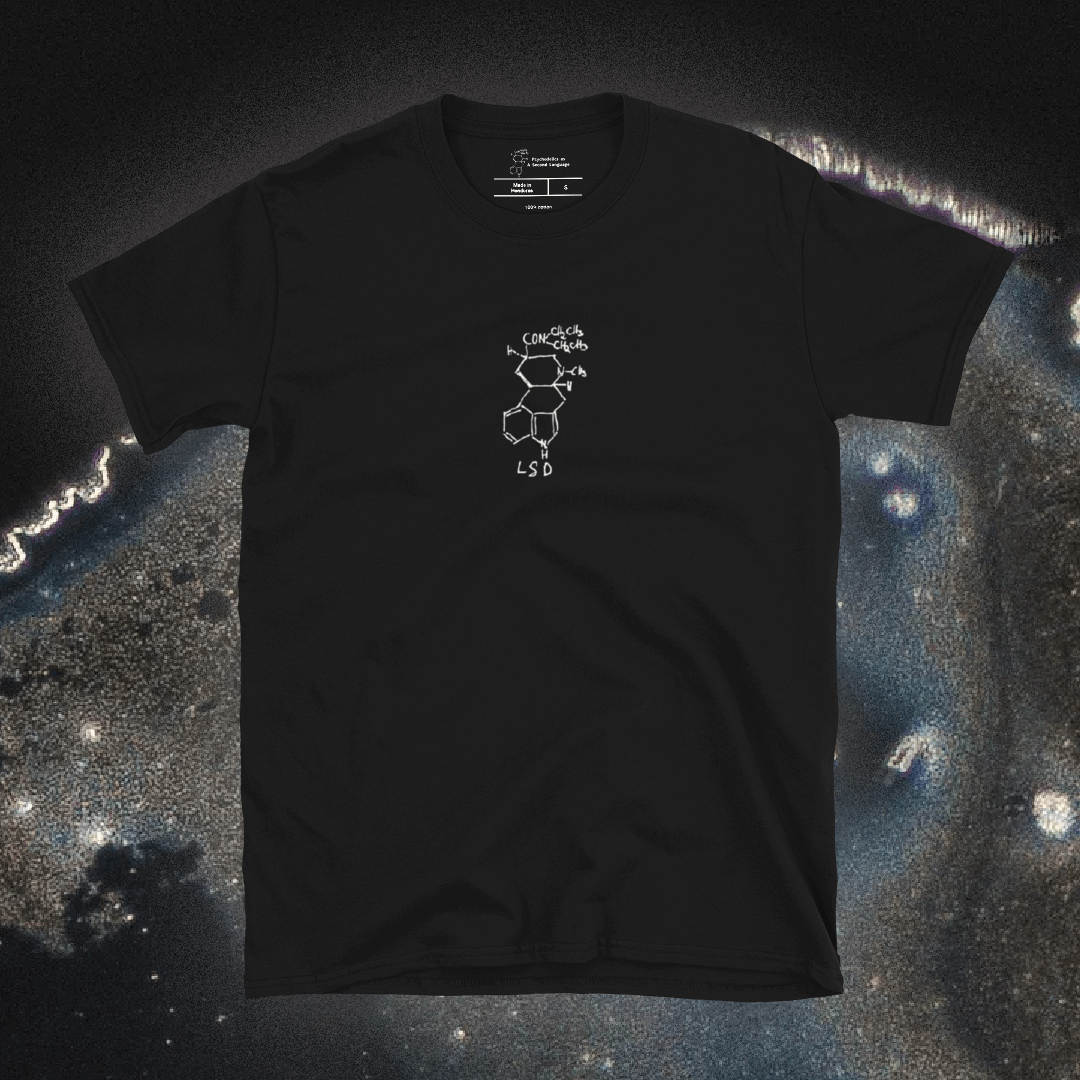
Albert Hofmann first discovered LSD in 1938. The compound is derived from ergot (Claviceps Purpurea), a fungus that grows on rye and other grains.
LSD is considered a classic psychedelic and therefore influences the brain’s serotonin receptors, the natural chemical responsible for regulating mood, emotions, and perceptions. By interacting with these receptors, LSD triggers a change in how people experience the world by altering their perception and potentially changing the way they perceive colors, shapes, and sometimes even causing hallucinations.
Due to its activity even on the scale of micrograms and its influence in the psychedelic community during the 60s, LSD became a notorious compound when mentioning psychedelics. The LSD experience can have many variables, including the dose taken, the person’s mental state and set, and the setting.
Its nickname “Acid” could bring out the idea that LSD has an acidic taste, but in reality, most of the time, LSD is either tasteless or can have a slight bitter taste that can go unnoticed by many people.
The same goes for its color and smell. They are pretty much nonexistent. LSD is a colorless and odorless liquid. For this reason, when we come across LSD, typically, we’ll see colorful blotter papers, or blotter papers filled with incredible or trendy illustrations.
In each blotter, a microscopic drop of LSD is put into each square, then cut into smaller pieces called tabs, with one tab typically being a single dose. Unfortunately, because LSD is active in such small amounts, what can happen is that the dose per tab can be uncertain. Some tabs can be stronger. Other tabs can be pretty mellow.
Other forms of LSD include:
Sugar cubes: LSD is dripped onto sugar cubes to make it easier to ingest.
Gelatin squares: Known as windowpanes, these are translucent sheets of LSD-gelatin
Pills or capsules: Less common, but can be used for precise dosing.
With this comes the question: “Since it’s a colorless, odorless liquid or is embedded in a tab, or gelatin, how can I know if my LSD has gone off?”
It’s important to note that LSD itself doesn’t “go bad”, in the sense that food or medication does, but this doesn’t mean that the compound won’t lose its potency.
The biggest factors that rapidly degrade LSD:
-UV light
-Direct sunlight
-High temperature
-Moisture & Air.
LSD tabs can lose their potency in months if kept in a humid or sunny environment. To preserve their potency for years, we must store them somewhere dark, cool, and dry.
Goncalo V. founded Psychedelics As a Second Language (PsychedelicsASL) in 2021 with the aim of making psychedelic science available and understandable for everyone, regardless of their background and scientific knowledge. Since then, he has interviewed various guests within the psychedelic field, including artists, psychedelic entrepreneurs, chemists, psychedelic researchers, therapists, and students, all with one goal. To give you an organic and raw experience of what is going on in the psychedelic field. From experimental science to well-established research, everything can be valued in his eyes (of course, as long as it’s in the legal spectrum).