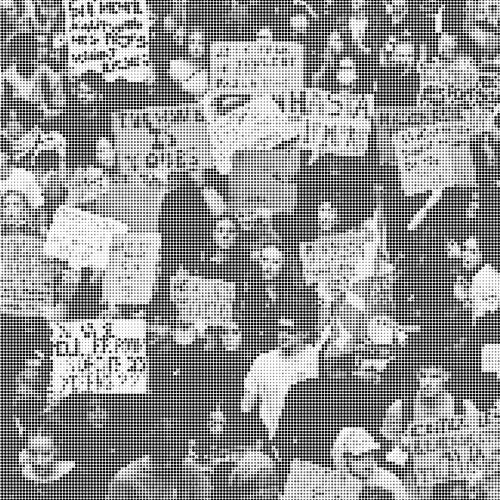
Those born in the 40s and 50s likely remember something similar during the golden age of counterculture and psychedelia in the 1960s, when a global movement rejected post-World War II conformity, consumerism, and the Vietnam War in favor of peace, love, and communal living. The most well-known milestones of this revolution were Haight-Ashbury (1965-1966), Summer of Love (1967), and Woodstock Music Festival (1969).
I believe we should plant a seed of thought when comparing these two events set 60 years apart. If we look at what qualified as “counterculture” in the 60s, we would find a group of people pro-self-development, attempting to achieve peace, communal living, self-sustainability, and, most importantly, pro-love. While the “culture” was the ideology of the American dream, following success, achieving richness, and being a part of a system that involved obtaining more, leading us to a bottomless pit, making us question, “When will it ever be enough? When will there be enough power, enough control?” which side of the coin has allowed us to thrive as a species? The one that has achieved communal living based on love, self-sufficiency, and care for others and nature, or the one that has been the cause of the decimation of millions of people throughout history to achieve power and expansion of territories, relies on what nature has to offer until the resources are scarce and unobtainable, etc. Who, in fact, is the counterculture at the end of the day?
Fast-forwarding to what is happening today, much of the leftist ideology has stemmed from what was called “the hippies” in the 60s. Ideologies that focus more on interpersonal relationships, self-sufficiency, caring about nature and its resources, animals, global warming, etc. And to the surprise of many, the so-called “leftists” are many of the faces who are actively protesting as of now for a better cost of living, available education for everyone, opposing corruption and wars, fighting for the better of all of ourselves. Yet they are still seen as the outcasts, as those who opposed being drafted to a war they did not choose to be in in the 60s.
A break of ideological barriers:
For the past decade, I’ve been analyzing reports of psychedelic experiences, and one of the most predominant recurring themes is the fact that people end up becoming different after having an experience that tests their beliefs. Their barriers end up being broken. What they thought was right or wrong turns into a false understanding of what the world could truly be. They start questioning everything they have ever learned, everything about how the world functions, and most of the time, dedicate themselves to creating their own philosophy and way of living, away from norms created by social constructs.
Personally, I think this is the true value of psychedelics. Breaking barriers while colliding with social constructs that made us live individually instead of living as a communal species thriving for survival. Instead of targeting those who attempt to fuel the world with love and simply calling them “hippies”. (Learn more about psychedelic individualism here!)
Goncalo V. founded Psychedelics As a Second Language (PsychedelicsASL) in 2021 with the aim of making psychedelic science available and understandable for everyone, regardless of their background and scientific knowledge. Since then, he has interviewed various guests within the psychedelic field, including artists, psychedelic entrepreneurs, chemists, psychedelic researchers, therapists, and students, all with one goal. To give you an organic and raw experience of what is going on in the psychedelic field. From experimental science to well-established research, everything can be valued in his eyes (of course, as long as it’s in the legal spectrum).